Thirty Three Jones | Desktop Site
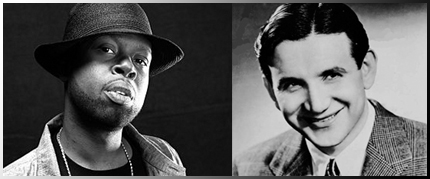
Seeing as how the Dillagence mixtape, the collaborative effort between Mick Boogie and Busta Rhymes, may be the last original work that we will ever get featuring the late J Dilla (excluding the inevitable retrospective/greatest hits cd a few years down the line), I thought I'd take another day to focus on one of the tracks from the tape.
As an aside, before we get to the Dilla portion of this post, allow me to briefly review Busta's appearance on Dillagence. The Good: His nod to Smooth B, as Busta patterns his flow on Step Up after Smooth's verse from Dwyck. The Bad: Busta's unbelievable claim that he was flipping bricks of cocaine back in his days as a Leader of the New School on Takin What's Mine. The Ugly: Using a J Dilla tribute to promote his upcoming album several times throughout (the title of which is "Back On My Bullshit"; that should manage to upset not only the executives over at Walmart, but also this dude).
Of course, Busta is secondary to the real force behind Dillagence, Dilla's production, and without question it delivers. Though every beat on here is solid, I found that the Lightworks track, remastered by Peanut Butter Wolf with added vocals from Q-Tip and Talib Kweli, stood out the most. An instrumental version of the song first appeared on Dilla's album Donuts, and it amazes me that anyone has been able to rap over it, composed as it is of a rather chaotic mix of electronic sounds and commercial voiceovers from the 1960's. It's not necessarily the best sounding track on the mixtape, but it's by far the most interesting:
Dilla, Q-Tip and Kweli - Lightworks
For the beat on Lightworks, Dilla used a rather surprising (to me) source: Raymond Scott. Scott, a jazz musician/composer/inventor who put out the bulk of his work from the 1930's to the 1970's, contributed so much to the evolution of music during the 20th century that it would be hard for me to do it justice in just a short piece. He is perhaps best known as the man behind the soundtrack to the Looney Tunes cartoons. Though he didn't compose his music specifically for the show, Warner Bros. bought the rights to his compositions and used them on virtually all of their cartoons from that era (the most famous example being Powerhouse, which should bring back memories of Saturday mornings for most of you). Perhaps most impressive was his work as one of the first, both as an inventor and as a musician, to delve into the field of electronic music, laying the groundwork for the modern studios that musicians use today. Scott also served as a mentor for Robert Moog, the creator of the legendary Moog synthesizer, and later worked under Berry Gordy at Motown, before spending the last years of his life near bankruptcy after most of his royalty money had been spent funding his own musical research (there's a fairly thorough overview of his life on Wikipedia).
The work that Dilla sampled for Lightworks comes from Scott's most lucrative period of output, when he focused on creating commercial jingles for the radio. Not surprisingly, considering his ongoing fascination with electronics, much of this music consisted of little more than a series of futuristic blips and beeps (essentially putting out Timbaland-style beats over sixty years before Timbaland did). I am in awe of the fact that Dilla was able to flip these samples into a coherent hip hop track. Here are the two commercials that were sampled for Dilla's version of Lightworks:
Bendix The Tomorrow People
Lightworks
I suspect it was Dilla's label mate Madlib who was responsible for putting him onto the work of Raymond Scott, or at least responsible for showing him that it was possible to craft a hip hop beat out of Scott's work. Madlib had been using the samples for years prior to Lightworks' appearance on Dilla's Donuts album, using it extensively for his Beat Konducta series, most notably sampling Baltimore Gas & Electric Co. on Electric Company:
Raymond Scott - Baltimore Gas & Electric Co.
For any aspiring producers reading this, I highly recommend picking up Scott's album Reckless Nights and Turkish Twilights. It's a great source for samples and has thus far been overlooked by most mainstream producers.
Shoutout to my coworker Mike (who may or may not be reading this) for identifying the samples used on Lightworks and for providing the tracks from Raymond Scott.
11/28/2007 08:00:01 PM posted by Fresh