Thirty Three Jones | Desktop Site
Imagine a panel of speakers, composed entirely of members of the hip hop community, coming together to discuss the topic of Financial Responsibility. The community that brought us iced-out grills, spinner rims and the tricked out Bentley (because a $200,000 car with stock parts just isn't enough), giving advice on how to be responsible with your money? Believe it or not, the Hip Hop Summit on Financial Empowerment actually occurred, last weekend in New York. Hosted by Russell Simmons, the conference brought together L.L. Cool J, Nas and T.I. to discuss "home ownership, budgets, credit cards and other financial issues." This got me thinking about the days in rap when the words "financial responsibility" and "hip hop" were not entirely oxymoronic.
Its hard to believe today, what with damn near every rapper dropping lines about how they've become members of the upper tax bracket, but there was a time when hip hop was not so devoted to the lifestyles of conspicuous consumption. Before Puffy was jumping into hot tubs with bottles of Cristal, before Big dropped Big Poppa, hip hop was actually going through a "grimy" phase where it was more focused on how to get money (by any means necessary) than how to spend money. You weren't going to find any platinum chains in the videos of Onyx, Redman or the Wu-Tang Clan, just hoodies and timberlands. That all changed in 1995, with the release of Ready To Die.
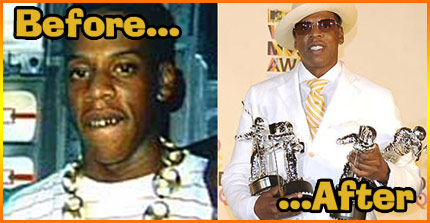
Biggie once said in an interview that he was strongly influenced by Onyx. In early photos of him, you can certainly see the ruggedness that would later be missing from Big Poppa. He flipped his style after Tupac told him the way to really sell records was to make music for the women, who were not checking for that grimy rap. So Big changed directions and started to drop rhymes from the perspective of someone who had money, rather than the real life struggle he was going through just trying to get by. You can hear a mix of both of these perspectives on his first album. On the one hand you have a song like Everyday Struggle with the line: "They don't know about the stress filled day / Baby on the way, mad bills to pay." At the same time, Puffy insisted that Big Poppa be added to the album at the last minute, to ensure the sales of the record. For that song, you have the line: "No need to be greedy, I got mad friends with benzes / C-notes by the layers, true fuckin' players."
From that point on, the hip hop game began to look more and more like Lifestyles of the Rich and Famous. There were occasional exceptions to this in mainstream rap, most notably the Fugees, but for the most part you weren't selling records if you weren't talking about how big your bank account was.
I'm not so pessimistic as to suggest that this trend is going to be the death of hip hop (its been going on for 10 years now, and we're still here), and I'm not going to get on some Dead Prez vibe and preach about how bad materialism is, but I don't think its good for this to continue much longer. There's only so many times you can hear someone kick a rhyme about their Bentley before it all starts to sound the same. And when that happens, people are going to move on to some other form of music. I don't think we're quite at that point, but as Elliot Wilson pointed out, it is impossible for most of these cats to continue living the lives they rap about, if they were ever able to. At some point, fans are going to recognize the absurdity of listening to a rapper barely getting by on royalty checks rapping about all the cars he owns (rents).
4/27/2006 11:04:44 AM posted by Fresh