Thirty Three Jones | Desktop Site
So how was your holiday? Me, I spent the time off around Thanksgiving dealing with a death in the family, allowing commitment issues to ruin one of the best relationships of my life, and ducking not-so-subtly veiled threats from a rapper who has apparently been stewing over a two year old grudge that I was only incidentally involved in. It was almost enough to ruin the buzz from my annual cocktail of Guinness and tryptophan, but thankfully I was able to hold off my impending emotional breakdown until after I had overindulged myself, long after the booze and turkey hangover had settled in. In general I try to stay positive (word to The Streets), but during the occasional bout of depression I find that Alex Ludovico's music speaks to me more directly than just about any emcee this side of Cage. So it was that I found myself revisiting Ludo's most recent project, Fame Kills, an album that I didn't get a chance to fully review when it was released this past summer.
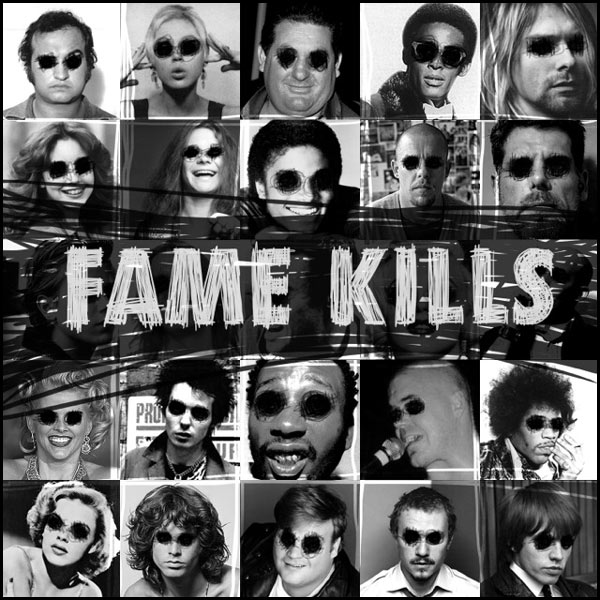
The title, the artwork for the album (a series of dead celebrities' headshots with their eyes scratched out in black marker), and the tracklisting (each track the name of a dead celebrity) all give a pretty good idea of the material that Fame Kills covers, with Ludovico using each song to analyze his career thus far and contemplate what sort of impact fame would have on his life. Rather than the usual indicators of album sales or fans or wealth, Ludo sees "fame" - for better or for worse - as the ultimate endpoint to a successful career, and his linking of fame to dead celebrities perhaps sheds some light on the reasons for his various acts of seemingly deliberate career and personal sabotage that are detailed throughout.
Alex Ludovico - Charles Bukowski
There is a deeper theme than fame running through the album, however, and it is summed up in a line from Charles Bukowski, the penultimate song of Fame Kills: "[They] never tell you that the real gateway drug is pain." This is an incredibly honest accounting of Ludo's life up to this point, with so many incidents of personal pain (inflicted as much by himself as by others) detailed that it could serve as a semester's worth of case studies for an Intro to Psych class. I've said before that Ludovico's song Don't Bother To Knock is one of the most accurate, stark portrayals of clinical depression that I've heard, and Fame Kills is equally accurate in its portrayal of the cause and effects of drug use. It's a refreshing contrast to the mainstream rap of today that depicts drug abuse as some sort of mark of achievement for all aspiring One Percenters, and it's far more interesting.
The album isn't without its flaws - a couple of beats veer a little too closely to dubstep territory for my liking, and the song Shannon Hoon worked better over its original beat when it was called Dragon Chaser - but those are minor quibbles in the context of an otherwise great project. Since releasing the album, Ludo has moved down to Georgia and is, I'm told, far removed from any recording equipment. So it's likely we won't be getting any new full length projects from him in the near future, and if that is the case then Fame Kills is a tremendous note to end on for the first chapter of his career. Here's hoping it was as cathartic for him to record as it was for me to listen to.
Alex Ludovico - Elliot Smith (aka Nothing)
You can download all of Fame Kills for free over at Alex Ludovico's bandcamp page.
Alex Ludovic - Charles Bukowski (live)
11/29/2011 6:30:00 AM posted by Fresh